Tour
How to Travel With Musical Instruments on Tour and Flights
A practical pre-tour checklist: airline baggage rules, packing gear in a flightcase, labels and documentation, and what to do if gear is damaged on the way.
· Tim BOXXCASE · 7 min read
The key to travelling safely with instruments is planning ahead: check the airline's rules before you book, use a case suited to how the gear will be handled, pack it so nothing can move, and document its condition before you hand it over.
This checklist is based on our experience working with musicians touring between cities and countries.
Before you go: check the airline rules
Every airline has its own policy for musical instruments, and policies change. Always read the airline's official page or call customer service before buying tickets. Confirm:
- Cabin or hold. Some airlines allow a guitar in the cabin if it fits the overhead bin, but space is not guaranteed.
- Weight and size limits for checked baggage, and the excess fees.
- Extra seats. For very valuable instruments such as a cello or a vintage guitar, buying a separate seat is often the safest option.
- Dangerous goods. Spare lithium batteries usually have to travel in the cabin, not the hold.
Choose the right protection
Once gear goes into the hold or a freight truck, you no longer control how it is handled. Other luggage gets stacked on top, and cases can be dropped. So:
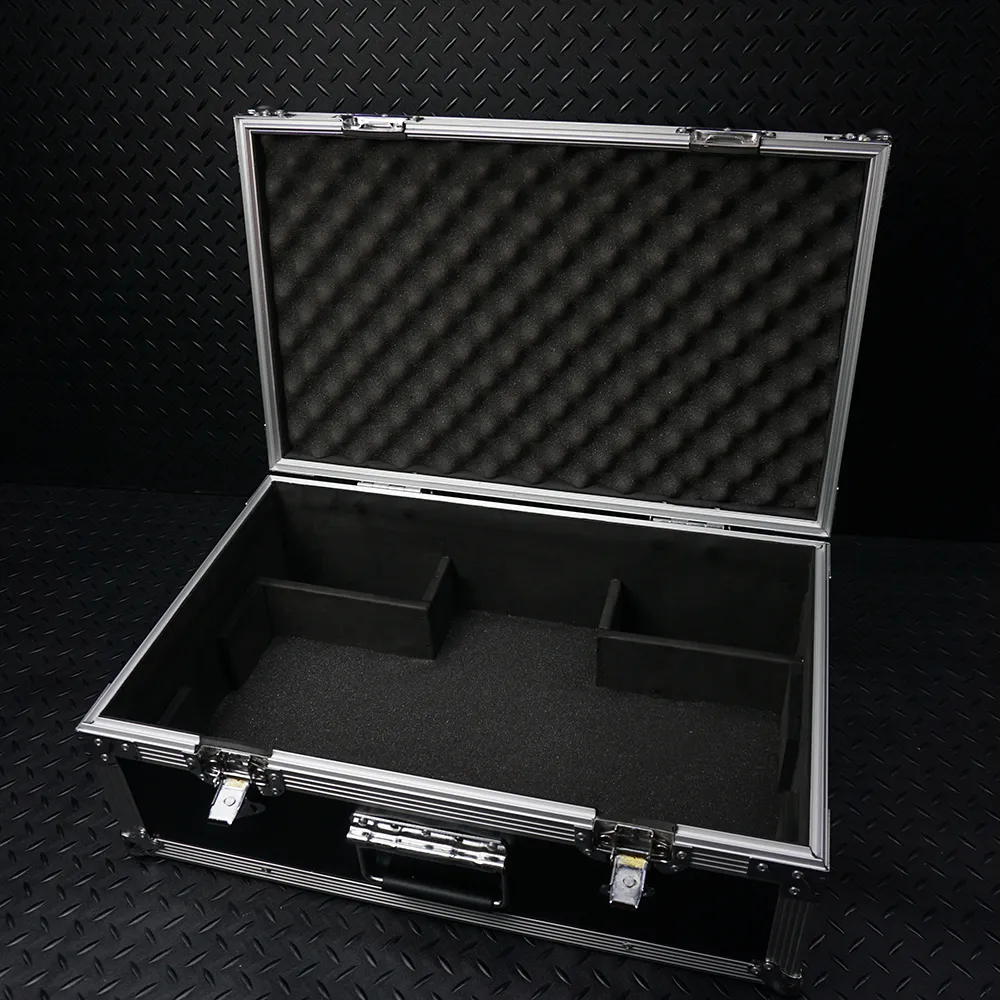
- Guitars and basses: use an instrument flightcase with foam cut to shape.
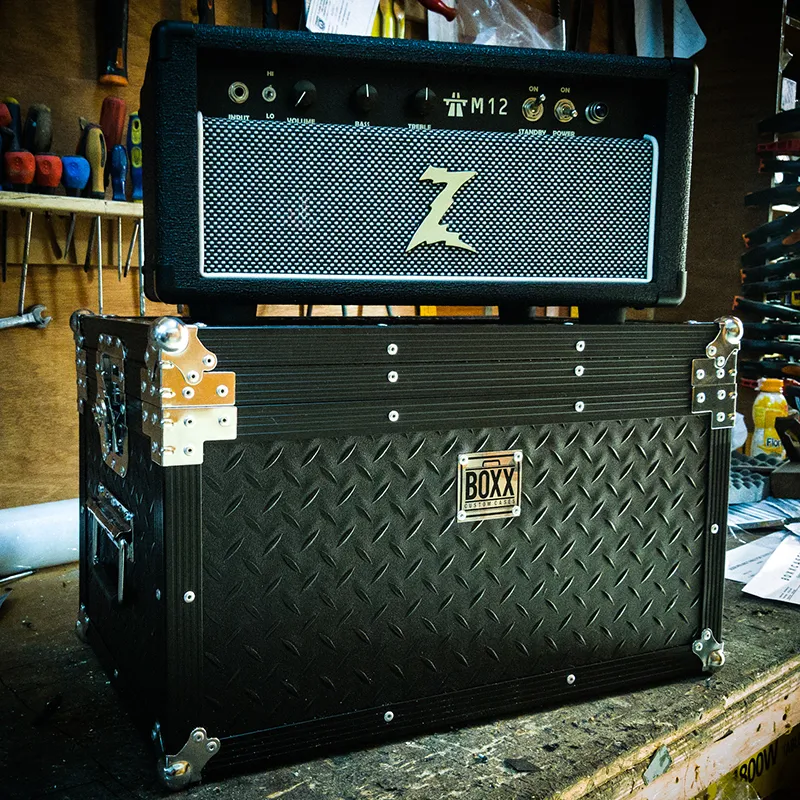
- Amps and cabinets: use an amplifier flightcase. Knobs and tubes are the most fragile parts.
- Mixers, racks, and audio gear: use a pro audio flightcase with rack rails or precision foam.
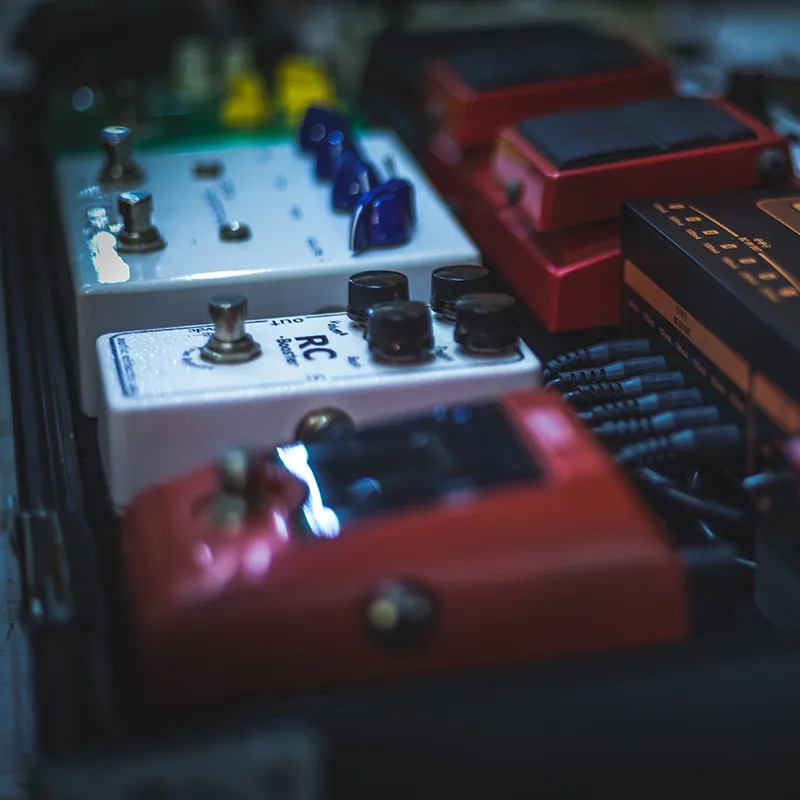
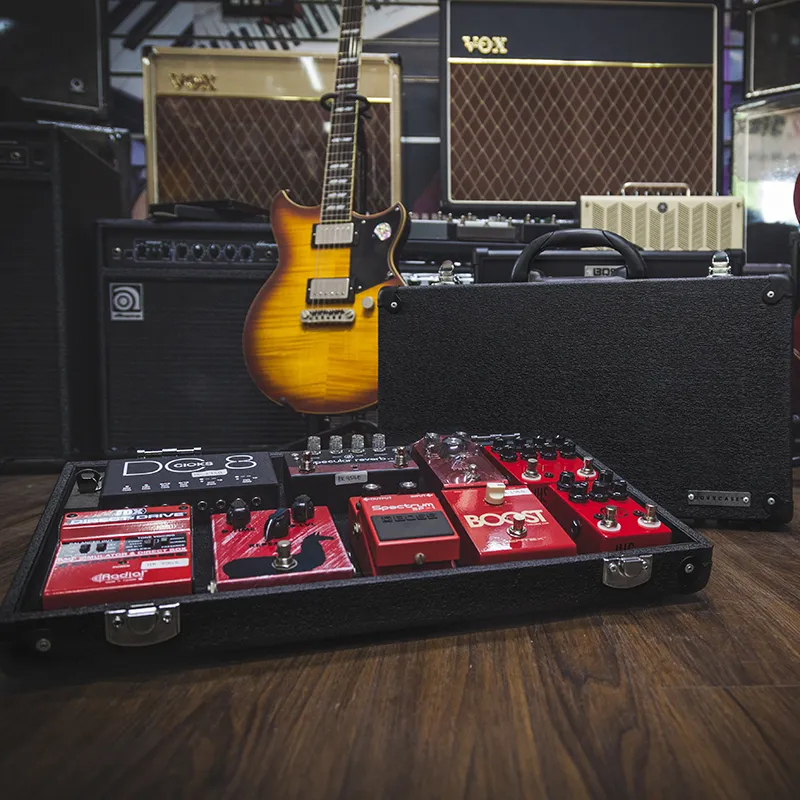
- Pedalboards: make sure no knob or footswitch presses against the lid.
Torn between a hardcase and a flightcase for your guitar? Read the full comparison in our guitar case guide.
How to pack gear so nothing moves
- No empty space. Shake the closed case. If anything moves, fill the gap with foam.
- Support the guitar neck. The headstock and neck joint are the most likely to break.
- Slightly loosen the strings if your tech recommends it, especially on long flights, to reduce neck tension through temperature changes.
- Remove batteries from pedals and wireless units. It prevents leaks and avoids security issues.
- Pack cables separately. Loose cables scratch finishes and press on jacks.
- For tube amps, consider removing the tubes and carrying them in a separate foam-lined box.
Take only the gear you actually use
Every extra case means baggage fees, loading time, and another chance of damage. Before the tour, build your gear list from the setlist. If a pedal or guitar is used for only one song, ask whether another piece you are already bringing can cover that sound. A leaner rig is also quicker to set up when soundcheck is tight.
Instrument-specific tips
Drums
Remove the hardware from the shells and pack it in a separate hardware bag. Cymbals are safest in a rigid cymbal case with dividers between them. For long tours, consider using the promoter's backline kit and bringing only your own snare, pedal, and cymbals.
Keyboards and synthesizers
Keys and screens are the most fragile parts. Use a case with foam that holds the keys from above so they cannot move. Remove the stand and sustain pedal and pack them separately.
Microphones and wireless gear
Condenser microphones are sensitive to knocks and humidity. Store them in a foam-lined box with a compartment for each mic and some silica gel. Remove batteries from transmitters and receivers before packing.
Labels, locks, and documentation
- Put your name, phone number, and band name on the outside and inside of every case.
- Add "FRAGILE" stickers and "this way up" arrows. No guarantee, but they help.
- For international flights, use locks that security staff can open without damaging the case.
- Photograph every instrument and case before check-in, including serial numbers. Dated photos help a lot when filing a claim.
- Keep an inventory of each case. On tours with many cases, it speeds up loading and stops things from being left behind.
Road tours by van or truck
Road tours bring their own risks: bumpy roads, hard braking, and a load that changes at every stop.
- Load heavy items low and against the cabin wall, then strap them down.
- Do not stack on cases that are not built for stacking. Flightcases with ball corners and flat lids are made for it.
- Wheels help with heavy cases. Venues rarely have a loading lift nearby.
- Avoid extreme heat. A vehicle parked in the sun gets very hot, which can damage glue, finishes, and electronics.
If gear is damaged on the way
- Inspect the case and contents before leaving the airport.
- Report it to the airline and ask for a written damage report.
- Photograph the damage from several angles, together with the baggage tag.
- Keep every piece of evidence: tickets, baggage tags, pre-trip photos, and repair invoices.
A 7-day pre-tour checklist
- Re-check the airline's policy and save a screenshot on your phone.
- Weigh every case going into the hold and note the weight.
- Give each instrument a light service: set intonation, change strings, check jacks and pots.
- Test every cable, adapter, and power supply. Replace anything doubtful now, not at the venue.
- Inspect the latches, hinges, wheels, and handles on every case.
- Prepare each case's inventory and photos of the gear's condition.
- Share the loading schedule and crew contacts with the whole team.
Spares you should always pack
In an unfamiliar city, the music shop may not be open when you need it. Pack a small box with the spares you are most likely to need:
- Spare strings for every instrument, including bass strings.
- Spare instrument and patch cables.
- A spare adapter or power supply, plus DC cables.
- 9V batteries for pedals or wireless microphones.
- Small screwdrivers, hex keys, pliers, and gaffer tape.
- For drummers: spare sticks, a drum key, and cymbal felts.
- For tube amps: spare tubes and fuses to spec.
Keep this box in your cabin bag or always close to you, not in the freight truck.
Insurance and the value of your gear
Airline compensation for baggage is usually capped by weight or a set amount, and rarely covers the full value of an expensive instrument. So:
- Consider dedicated musical instrument insurance, or a policy extension that covers travel.
- Keep receipts, serial numbers, and recent photos of every item.
- For very valuable items, ask the airline about declaring excess value before check-in.
After you get home
- Open every case and let the gear reach room temperature before playing it.
- Re-check guitar necks and adjust if needed. Long journeys often shift a setup.
- Dry out damp cases so the foam does not grow mould.
- Note small damage to cases and fix it before the next tour.
Need a case for your touring rig?
Every touring rig is different. At the BOXXCASE Custom Shop, we can build one case for a guitar plus a pedalboard, or a road case holding several audio devices with a precise foam layout.
Frequently asked questions
Can I take a guitar into the aircraft cabin?
It depends on the airline and available space. Check the official policy before booking, and have a flightcase ready in case the guitar has to be checked.
Should I remove the strings before flying?
No need to remove them. Many techs suggest loosening them slightly. Follow advice from a tech who knows your guitar.
What about pedals or devices with lithium batteries?
Lithium batteries installed in a device are usually treated differently from spare batteries. The rules depend on battery capacity and airline policy, so check the airline's official page before you fly and carry spare batteries in the cabin.
What if I have a connecting flight?
Ask at check-in whether your baggage is checked through to your final destination. The more often baggage is transferred, the higher the risk, which makes flightcase protection even more important.
Does a flightcase guarantee my gear won't be damaged?
No case is a 100% guarantee. But a flightcase with well-fitted foam reduces the risk dramatically compared to a gig bag or standard hardcase.
- Tour
- Flightcase
- Travel