Custom Shop
Custom Flightcase Guide: Sizing, Materials, and Foam
Before you order a custom flightcase: how to measure gear properly, choose materials and hardware, pick interior foam, and what details to prepare.
· Tim BOXXCASE · 6 min read
A good custom flightcase starts with accurate gear measurements, the right foam, and hardware that suits how the case will be used. The more complete the information you give at the start, the more precise the case and the fewer revisions you need.
This guide helps you prepare all of that before talking to a workshop.
When does a custom flightcase make sense?
- Your gear has no factory case, or its stock case is not strong enough for touring.
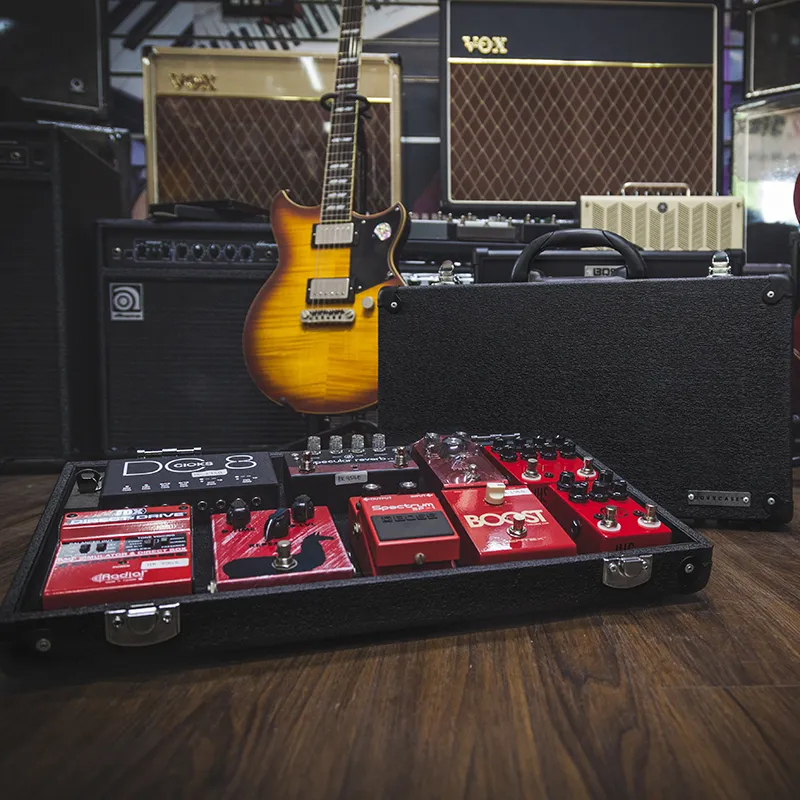
- You want one case for several items, such as a guitar and a pedalboard, or a mixer and cables.
- The gear is valuable or hard to replace: vintage equipment, measuring instruments, or medical devices.
- You want a visual identity: a band logo, a company name, or a specific colour.
Custom flightcases are not just for music. Lines such as the Utility Flightcase are widely used for cameras, drones, medical equipment, and telecom devices.
Step 1: Measure your gear properly
- Measure the outermost points: length, width, and height, including knobs, levers, rubber feet, and protruding connectors.
- Note irregular shapes. Guitars, amps with handles, or devices with antennas need a sketch or photos from several sides.
- Weigh it. Weight determines panel strength, handle type, and whether you need wheels.
- List accessories that go inside: cables, adapters, microphones, or remotes.
The most common mistake is forgetting protruding parts. One centimetre can stop the lid from closing.
Step 2: Understand flightcase construction
Panels
Most flightcases use plywood panels covered in scratch-resistant laminate. Thicker panels are stronger but heavier. The workshop matches the thickness to the gear's weight and how the case will be used.
Frame and corners
Aluminium extrusions protect the panel edges from impacts. Ball corners shield the most vulnerable points when a case is dropped, and allow stable stacking.
Latches, hinges, and handles
Recessed butterfly latches do not snag or snap easily. Spring-loaded handles that sit flush in the panel keep hands safe and do not stick out when cases are stacked.
Wheels
For heavy cases such as amp cabinets, racks, or drums, castors help enormously. Choose braked wheels if the case will stand on a sloping stage.
Step 3: Choose the foam
| Foam type | Character | Best for |
|---|---|---|
| Dense foam (PE) | Firm, water-resistant, does not compress easily | Heavy gear, boxy shapes, racks |
| Soft foam (PU) | Cushioning, absorbs vibration | Instruments with delicate finishes |
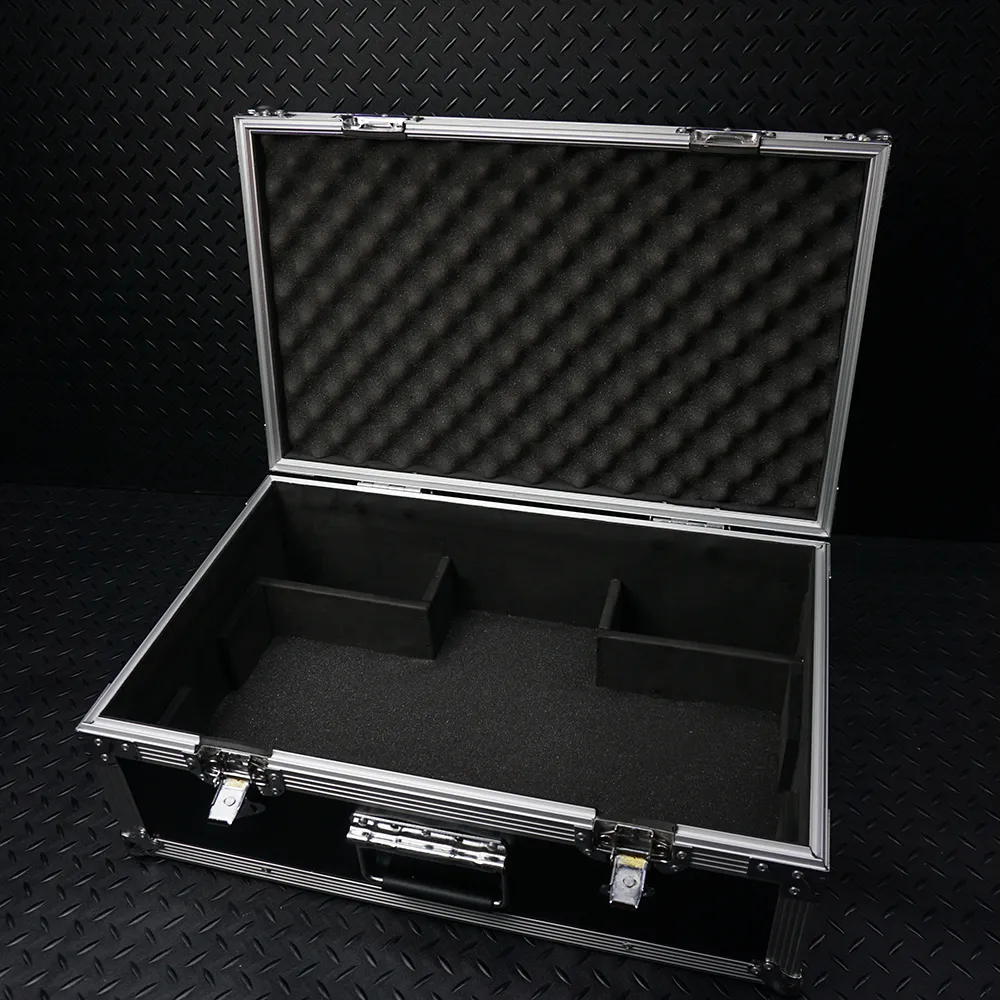
| Egg-crate foam | Lines the lid, holds gear from above | The top layer of almost any case |
| Precision cut-outs | Cut to the exact shape of the gear | Guitars, microphones, high-value devices |
A common combination is dense foam at the base for support, foam cut to the gear's shape in the middle, and egg-crate foam in the lid to press the gear gently from above.
Estimating the outer dimensions
A flightcase is always larger than the gear inside it. The extra size comes from the foam on every side, the panel thickness, and the frame and corners that stick out. So make sure the outer size still:
- Fits your vehicle, including the height of the car boot or van.
- Clears the doors and lifts at the studios and venues you use most.
- Meets airline baggage limits if the case will fly often, since oversize baggage can incur fees.
Ask the workshop to state the estimated outer dimensions and empty weight with your quote, so you can check them before production starts.
Choosing hardware for your scenario
| Scenario | Recommended hardware |
|---|---|
| Stored in a studio, occasionally moved | Butterfly latches, side handles, ball corners |
| Regular road tours by van | Recessed spring handles, stackable ball corners, lockable latches |
| Heavy cases or racks | Braked castors, handles on both sides, thicker panels |
| Frequent flights | Recessed latches, strong corners, dimensions matched to baggage limits |
Step 4: What to prepare for the consultation
- Brand, model, and size of every item going in.
- Photos of the gear from the front, side, and top.
- How the case will be used: studio storage, car trips, road tours, or checked airline baggage.
- Special requirements: wheels, cable compartments, rear-panel access without removing the gear, or a logo.
- How many units you need, and your deadline.
Common mistakes when ordering a custom case
- Measuring the gear without its attachments. Cables that stay plugged in, handles, or extra feet are often forgotten.
- Ignoring access. Some gear must be operated inside the case, such as a mixer or a rack. Say so early so the front and rear lids can be removed.
- Overlooking total weight. A case too heavy for two people should get wheels or be split into two cases.
- Leaving no room to upgrade. If you plan to change gear soon, ask for foam that is easy to replace.
Finishing and branding
A custom flightcase is also part of your identity on stage. Options to discuss with the workshop include:
- Laminate colours beyond standard black, to tell cases apart between band members or departments.
- Logos or names as prints, quality stickers, or plates fixed to the panel.
- Content labels such as "GUITAR 1" or "FOH MIXER" so crew can find the right case quickly during load-in.
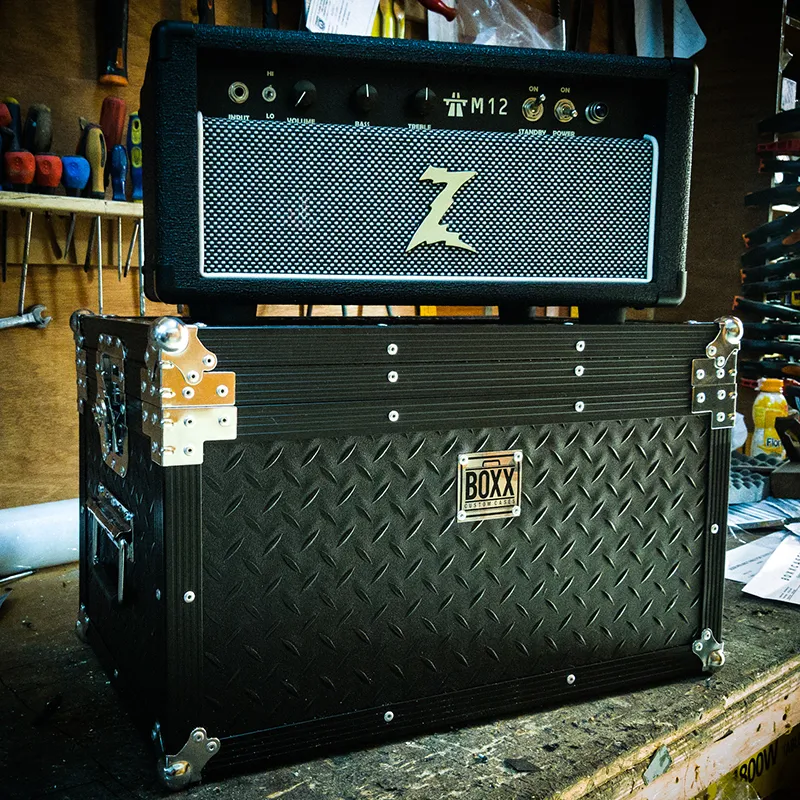
- Hardware series matching the look you want, such as Standard, Deluxe, or BlackChrome at BOXXCASE.
Not just for musicians
The same principles apply across many industries. Cameras and drones need precision foam and quick access. Medical and measuring equipment needs protection from vibration. Telecom gear and portable servers need rack rails and airflow. Explain how the case will be used, and its construction can be matched to the risks it will really face.
Caring for your flightcase
- Lubricate hinges and latches occasionally so they do not seize.
- Tighten screws or rivets that start to loosen.
- Vacuum the foam, and never store the case while it is wet.
- Check the wheels regularly, because worn castors make a case hard to steer.
Repair or replace an old case?
An old case does not always need replacing. Hinges, latches, wheels, and foam can usually be replaced one by one. Consider a new case if the panels are cracked or rotting, the aluminium frame is bent, or your gear has changed to a very different size. In those conditions, the protection is no longer reliable even with new hardware.
The process at the BOXXCASE Custom Shop
- Consultation — tell us about your gear and needs via the form or WhatsApp.
- Design and quote — our team drafts the specification and sends a quotation.
- Production — the case is precision-built in our Jakarta workshop with quality control.
- Delivery — shipped across Indonesia, or picked up at the workshop.
Ready to start? Send a quote request, or browse our work in the Custom Gallery first. For amps, see the Amplifier Flightcase examples too.
Frequently asked questions
How long does a custom flightcase take?
It depends on the design's complexity and the production queue. We include a time estimate with your quote.
Can the foam be replaced if I change gear?
Yes. The foam interior can be rebuilt for new gear without replacing the whole case, as long as the outer dimensions still fit.
Can I reuse a case design you have built before?
Yes. If your gear matches a design we have already made, it can serve as the reference, which shortens the design stage. Small adjustments are still possible.
What if I don't know the exact size of my gear?
Send us the brand and model. For common gear, the size can be checked from official specs. For custom gear, photos with a tape measure alongside help a lot.
Can I order just one unit?
Yes. Custom flightcases are made to order, whether you need one unit or a batch for a team or company.
- Custom Shop
- Flightcase
- Road Case