Pedal Care
How to Care for Guitar Effects Pedals, New or Used
Routine pedal care for humid climates — cleaning jacks and knobs, storing pedals properly — plus a complete checklist before you buy a used pedal.
· Tim BOXXCASE · 7 min read
Guitar effects pedals can last for years if you do three things: keep them dry and clean, service the jacks and pots regularly, and store them in a case that protects them from knocks. In a humid tropical climate, this care matters even more than in dry countries.
At the end, you will find a checklist for buying used pedals.
A pedal's main enemies in tropical climates
- Humidity oxidises jacks, footswitches, and component legs. The symptom is signal dropouts or crackles when a cable is touched.
- Dust gets into the pots (knobs) and makes them scratchy when turned.
- Heat, for example in a car boot parked in the sun, can damage electronics and glue.
- Impacts loosen jacks and footswitches, especially when pedals travel without a case.
Routine care
After every gig
- Wipe the enclosure with a dry cloth to remove sweat and dust.
- Unplug by holding the connector, never by pulling the cable.
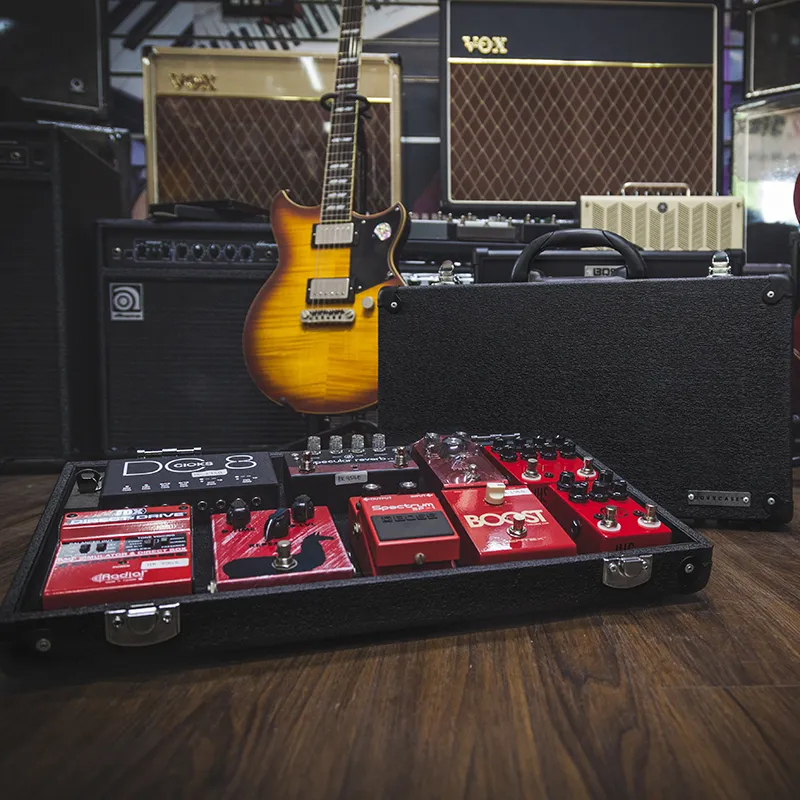
- Store pedals or the pedalboard in a closed case, not out in the open.
Every few months
- Clean jacks and connectors with an electronics contact cleaner. Apply a little to the jack, plug and unplug a cable a few times, then let it dry.
- Sweep every knob from minimum to maximum several times. This helps clear light dirt from the pot track.
- Check the footswitch. If it needs several stomps to engage, it may need replacing by a tech.
- Check patch and DC cables. A faulty cable is often mistaken for a faulty pedal.
About batteries
If a pedal uses a battery, remove it when the pedal will not be used for a while. A leaking battery can ruin the terminals and circuit board traces. For regular use, an isolated power supply is more practical and cannot leak. See also our pedal power supply guide.
A 5-minute pre-gig check
- Power up the board at home or during soundcheck, never for the first time on stage.
- Engage each pedal one at a time and listen for noise or dropouts.
- Gently wiggle the patch and DC cables at every pedal.
- Make sure the tuner reads steadily and every digital preset is correct.
- Keep a spare instrument cable next to the board.
This short routine catches most problems before the audience ever hears them.
Storing pedals properly
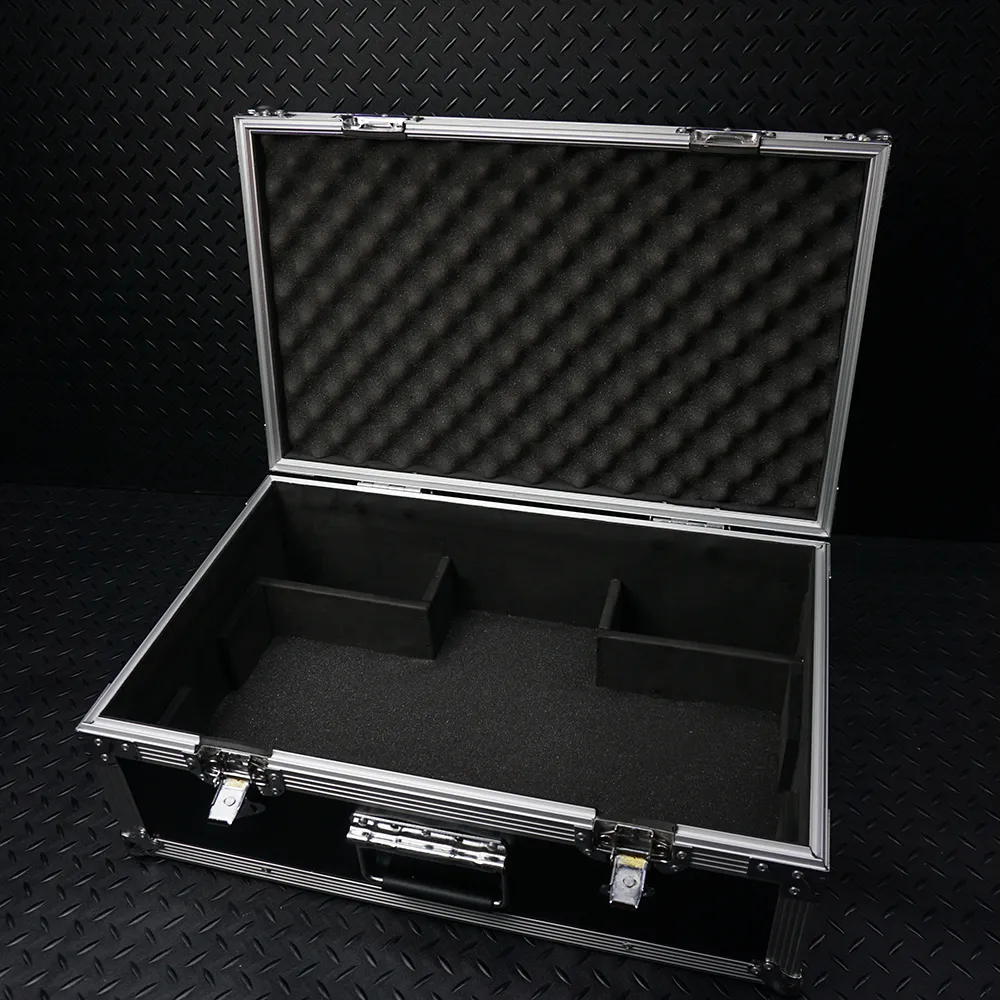
- Use a case or a pedalboard with a lid. It keeps out dust and absorbs knocks.
- Add silica gel inside the case and replace it regularly, especially once it changes colour.
- Do not store pedals on the floor or near a sunny window.
- Pad stacked pedals so knobs are not pressed. Constant pressure can bend a pot shaft.
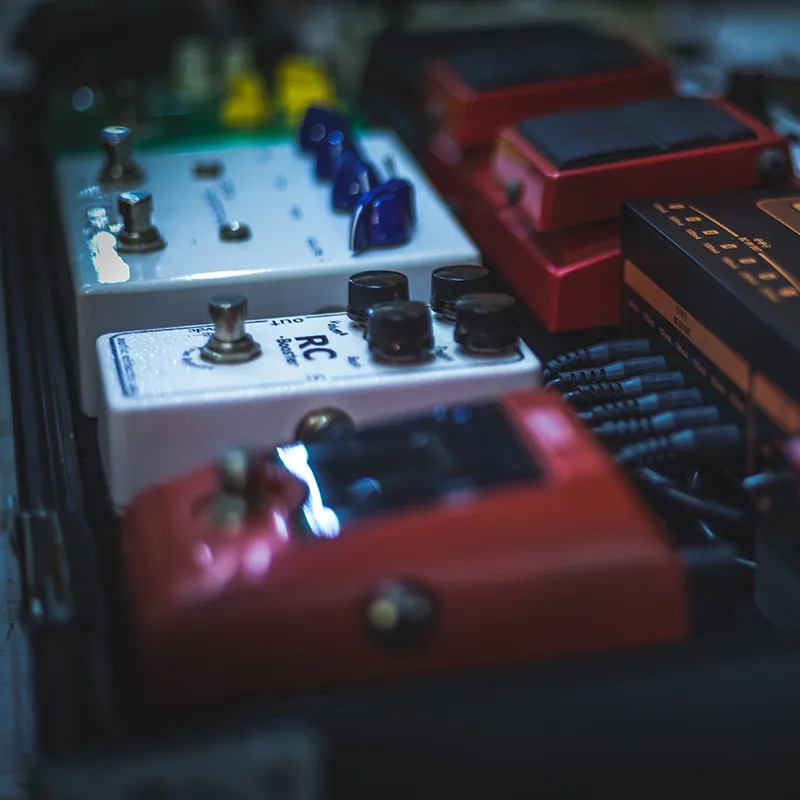
On a pedalboard, a Pedal Riser helps space pedals so their knobs do not touch.
Recognising symptoms and their causes
| Symptom | Likely cause | First step |
|---|---|---|
| Dropouts when a cable is touched | Dirty or loose jack, faulty cable | Swap the cable, clean the jack |
| Scratchy knob when turned | Dust or oxidation in the pot | Sweep it repeatedly, use contact cleaner |
| Pedal hard to engage | Worn footswitch | Have a tech replace it |
| Loud hum | Power supply, ground loop, cables | Test with an isolated supply |
| Digital pedal keeps rebooting | Not enough current from the supply | Check mA needs against the output |
Always start with the cheapest, easiest causes to check, such as cables and power, before concluding the pedal is broken.
Caring for digital pedals and multi-effects
- Back up your presets regularly to a computer or the manufacturer's app. Memory faults can wipe settings you spent months building.
- Update firmware only from official sources, and never cut the power during an update.
- Use stable power. Fluctuating voltage is more dangerous for digital pedals than for analog ones.
- Protect screens and buttons with a case that does not press on their surface.
Protecting resale value
A well-kept pedal lasts longer and is easier to resell at a good price. Keep the box, manual, and original accessories. Avoid sticking labels or hook-and-loop tape directly on the enclosure unless you need to, and keep a note of any servicing. Buyers of used pedals value a clear history.
Extra care in the rainy season
- Never carry an open pedalboard in the rain, even from the car to the venue.
- If a pedal gets wet, do not power it up. Let it dry completely and have a tech check it.
- Replace silica gel more often during humid months.
Checklist before buying a used pedal
A used pedal is an affordable way to get quality gear, as long as you check it carefully. If you can, test it with a guitar and amp.
- Physical condition: look for dents, cracks, or drop marks. A hard knock can crack solder joints inside.
- Every knob: turn each one and listen for crackles or volume jumps.
- Footswitch: stomp it repeatedly. The pedal should switch on and off consistently without excessive popping.
- Input, output, and DC jacks: wiggle the cables gently while the pedal is on. Dropouts mean loose or dirty jacks.
- Battery compartment: check for leak residue or corrosion on the terminals.
- Noise: turn the pedal on with all knobs at noon. Light hiss is normal for some designs, but loud hum is a warning sign.
- Authenticity: for valuable pedals, match the serial number, labels, and printing details against official references.
- Service history: ask whether the pedal has been opened or modified.
Want an easier route? Browse used guitar effects in great condition in the BOXXCASE STORE, part of the BOXXCARTEL ecosystem.
A basic care kit worth owning
- A microfibre cloth to clean enclosures without scratching.
- Electronics contact cleaner for jacks and pots.
- A small brush or air blower to clear dust between knobs.
- Small screwdrivers and wrenches to tighten jack nuts that loosen from the outside.
- Silica gel and a sealed container for storage.
- A spare cable and power supply to confirm a problem is really in the pedal, not its accessories.
New or used?
A new pedal comes with an official warranty and a known condition. A used pedal costs less and gives you the chance to own models that are no longer made. Choose new if you need maximum reliability for a busy gig schedule. Choose used if you want to experiment with many sounds or hunt a particular model, as long as you inspect it carefully.
Well-kept pedals also tend to hold their value, so looking after them from day one protects your investment.
When to see a tech
- The pedal is completely dead even though the power is confirmed correct.
- You smell burning or see swollen components.
- Dropouts continue after cleaning the jacks.
- The pedal has been exposed to liquid.
Do not open a pedal yourself if you are not comfortable with electronics. You risk damaging it, and it can void the warranty.
Frequently asked questions
Can I clean a pedal with alcohol?
For the outside of the enclosure, a cloth lightly dampened with alcohol is fine if you wipe it dry straight away. For jacks and pots, use an electronics contact cleaner.
How often should pedals be cleaned?
Wipe the enclosure after every use. Clean jacks and pots every few months, or more often if the pedal gigs a lot.
Is contact cleaner safe for every pedal?
Use a product made for electronics that is safe on plastics. Apply only a little, and avoid spraying parts that do not need cleaning.
How should I store pedals I rarely use?
Remove the batteries, keep them in a closed box or case with silica gel, and power them up occasionally so you know they still work.
What should I do first after buying a used pedal?
Clean the enclosure and jacks, replace any old battery, then test the pedal in your own rig with the correct power supply. Note its condition as a reference in case problems appear later.
Is it safe to buy used pedals?
Yes, if you test them against the checklist above or buy from a trusted seller who lets you test first.
- Pedal Care
- Used Gear
- Maintenance