Flightcase
Flightcase vs Hardcase vs Gig Bag: Choosing a Guitar Case
Gig bag, hardcase, or flightcase? A practical guide to choosing a guitar case based on how you play, how you travel, and how valuable the guitar is.
· Tim BOXXCASE · 7 min read
The best guitar case is the one that matches how your guitar travels. A well-padded gig bag is enough for rehearsals and local gigs. A hardcase is the right call for a valuable guitar that often rides in a car. For touring, checked airline baggage, and freight, only a flightcase is truly built to survive impacts and heavy stacking.
This guide compares all three honestly, with their strengths, their weaknesses, and the signs that it is time to step up your protection.
The three types of guitar case
1. Gig bag: light and practical
A gig bag is a fabric or nylon bag lined with foam. It is light, easy to carry on your back, and affordable. A good one has at least 10–20 mm of padding, a neck support, and pockets for cables and a tuner.
- Best for: rehearsals, lessons, café gigs, and trips where the guitar never leaves your hands.
- Weakness: no resistance to pressure from above. Crushed under other luggage, a neck can snap.
2. Hardcase: a rigid shell for everyday use
A hardcase uses a wood, ABS, or fiberglass shell with a plush interior shaped to the guitar. The rigid shell absorbs light knocks and pressure, so the guitar stays safe in a car boot.
- Best for: valuable guitars, long-term storage, and road trips.
- Weakness: standard hinges and latches are often the weak point. Most hardcases are not designed to be thrown by baggage handlers or stacked in a freight truck.
3. Flightcase: the touring standard
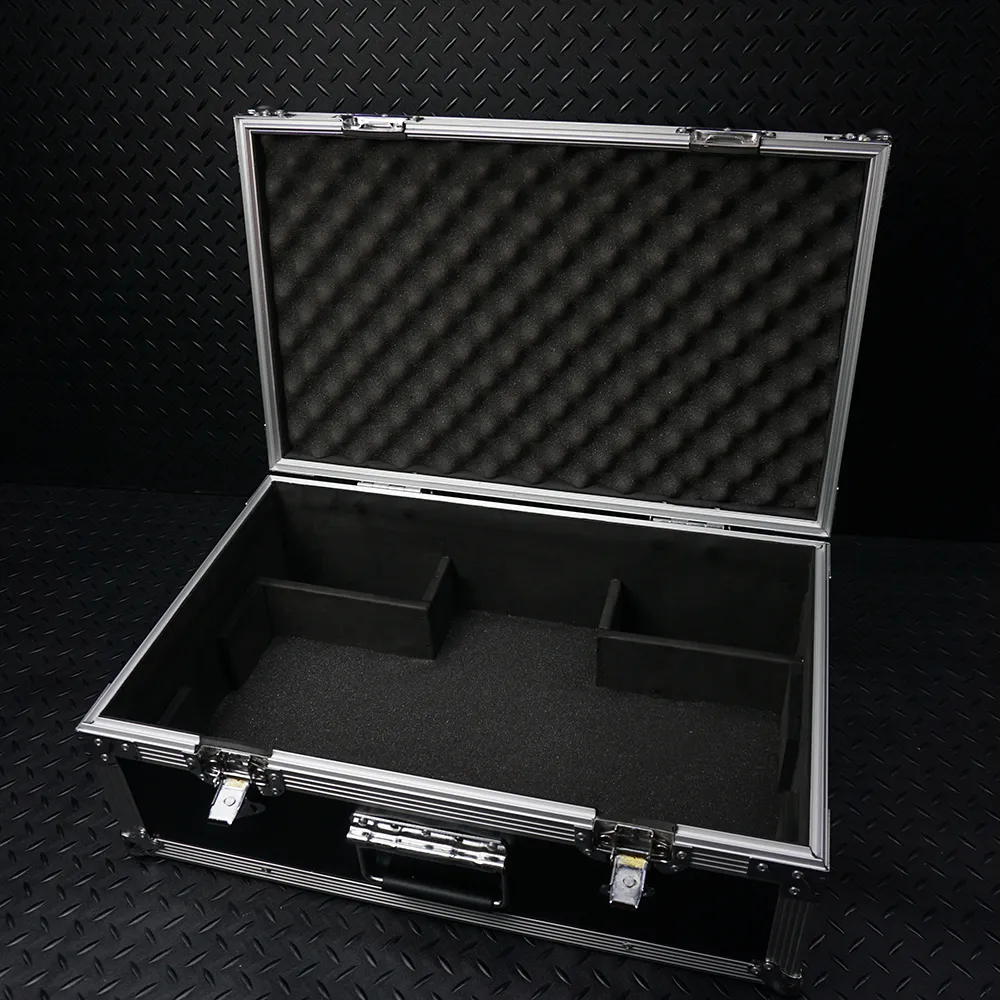
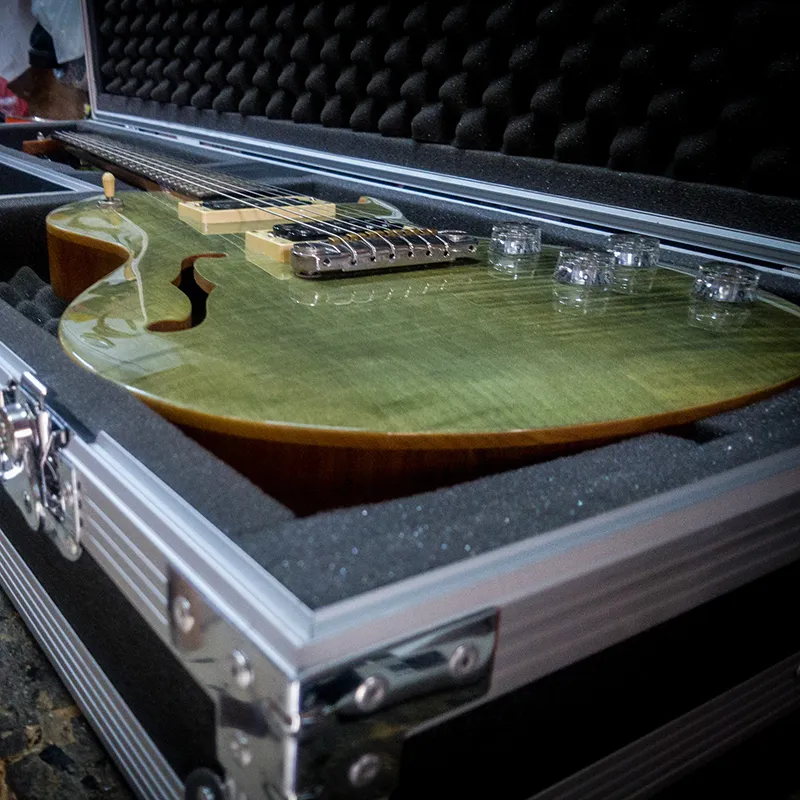
A flightcase (often called a road case) is built from laminated plywood panels, an aluminium extrusion frame, steel ball corners, and recessed butterfly latches. The interior uses foam cut precisely to the instrument, so the guitar cannot shift inside.
- Best for: intercity tours, checked airline baggage, freight, and guitars that simply cannot be damaged.
- Weakness: heavier and more expensive than a hardcase.
You can see this construction in the BOXXCASE Instrument Flightcase line, built in our Jakarta workshop.
Quick comparison
| Aspect | Gig bag | Hardcase | Flightcase |
|---|---|---|---|
| Impact protection | Low | Medium–high | Very high |
| Crush/stacking resistance | Low | Medium | Very high |
| Weight | Lightest | Medium | Heaviest |
| Checked airline baggage | Not recommended | Risky | Designed for it |
| Price range | Affordable | Mid-range | Long-term investment |
Five questions to decide
- How often does the guitar leave home? Once a month to the studio? A quality gig bag will do. Every week in a car boot? Consider a hardcase.
- Does the guitar ever leave your hands? Once it goes to a crew, an airline, or a courier, you no longer control how it is handled. That is when a flightcase becomes essential.
- What is the guitar worth, including sentimental value? Repairing a snapped neck or cracked headstock can cost more than the best case.
- Is the shape non-standard? Custom guitars, five-string basses, and double-necks rarely fit factory cases. A case built to the real dimensions is far safer.
- How much weight can you carry? A flightcase is safest but heaviest. For solo travellers, wheels and good handles make a big difference.
Small details people forget
- Neck support: the neck should rest on foam, not hang in the air. It is the part that breaks most often.
- Foam density: soft foam lets the guitar float and still get shaken. Good foam feels firm when pressed.
- Accessory space: a closed compartment for cables and capos stops small items from scratching the finish.
- Latches and hinges: recessed hardware is much less likely to break when bumped.
- Humidity: in a tropical climate, keep a sachet or two of silica gel in the case and replace them regularly.
Understanding hardcase shell materials
Not all hardcases are equally strong. The shell material decides how well a case handles impacts, pressure, and changes in weather.
- Tolex-covered wood. Classic and sturdy, common as the stock case for premium guitars. Its strength depends on the quality of the wood and glue. The weak points are the corners and hinges, especially when the case gets knocked often.
- Moulded ABS or polyethylene. Lighter and water-resistant. The shape follows the guitar, so it is compact, but thin walls can flex under heavy loads.
- Fiberglass or carbon. Very stiff and light for its strength, but expensive, and cracks can spread after a sharp impact.
A flightcase is different because its strength comes from the combination of laminated panels, an aluminium frame, and steel corners. No single weak point takes the whole impact, which is why flightcases remain the standard in professional touring.
Acoustic, electric, and bass guitars need different things
Acoustic guitars
A hollow, thin acoustic body is the most sensitive to temperature and humidity. Choose a snug interior, add silica gel, and never leave the guitar in a hot car. Cracks in a wooden top often start with humidity changing too quickly.
Electric guitars
Solid bodies handle knocks better, but they have protruding parts: knobs, switches, tremolos, and tuners. The foam must leave room around them so they are not under constant pressure. Guitars with angled headstocks, such as single-cut models, are prone to breaks if the neck is not supported.
Basses
Basses are longer and heavier, which puts more load on the neck and on the case handle. Make sure the handle and hinges are designed for that weight. Five- and six-string basses often have necks too wide for a standard guitar case.
Caring for your case
- Vacuum the interior regularly. Dust and grit in the foam can scratch the finish.
- Check hinges and latches every few months. Tighten loose screws before they fail while you are lifting the case.
- Never store a guitar in a damp case. If the case gets wet, open it and let it air out until completely dry.
- Replace foam that has compressed. Foam that no longer supports the guitar lets it move freely inside.
How much should you spend on a case?
A simple way to set a budget is to compare it with the worst-case repair bill, not with the price of the guitar. Fixing a snapped neck, a cracked headstock, or a chipped finish often takes real money and time, plus the risk of the guitar being out of action when gigs are already booked.
As a rough guide:
- Practice guitars used at home: a thickly padded gig bag is enough.
- Your main gigging guitar: a quality hardcase or a flightcase, depending on how often the guitar is handed to other people.
- Guitars that tour or fly: a flightcase is an investment, not an expense. A single baggage incident can cost more than the case.
One good flightcase can also outlast several gig bags that need replacing because they tear or their foam goes flat.
When should you order a custom case?
Go custom if your guitar has an unusual shape, if you want one case to hold the guitar plus pedals and cables, or if you want your band's branding on the outside. At the BOXXCASE Custom Shop, our team measures your instrument, designs the foam layout, and sends a quote before production begins. For more compact storage, see the Instrument Case line.
Frequently asked questions
Can a hardcase go in checked baggage?
It can, but it is risky. A standard hardcase is not built to withstand stacks of heavy luggage. If the guitar must be checked, a flightcase is much safer.
Is a gig bag enough on a motorbike?
For short trips with the guitar on your back, a thick gig bag is fine. Avoid strapping it to the seat or putting it in a box carrier.
Is the stock factory case good enough?
For storage and trips in your own car, the stock case of a premium guitar is usually fine. For checked baggage and freight, stock cases are rarely designed to survive stacking and hard impacts.
How long does a flightcase last?
With reasonable care, a quality flightcase lasts for years. The foam can be replaced when it starts to compress, without replacing the whole case.
- Flightcase
- Hardcase
- Gigbag